My AllStarLink Node — Local RF with Worldwide Reach


One of my favorite pieces of amateur radio equipment in my home lab is actually a combination of traditional analog FM radio and modern Internet linking: my full-duplex AllStarLink node.
I primarily use the node to connect to the Carolina 440 UHF Link System here in North Carolina. Carolina 440 is a wide-area network of linked UHF repeaters covering a substantial portion of the state, with AllStar providing additional connectivity beyond the RF network. I also use AllStar to connect with the New England 900 network, which gives me a great way to get on the radio and talk with friends back in the Northeast.
A Repeater in My Home Lab
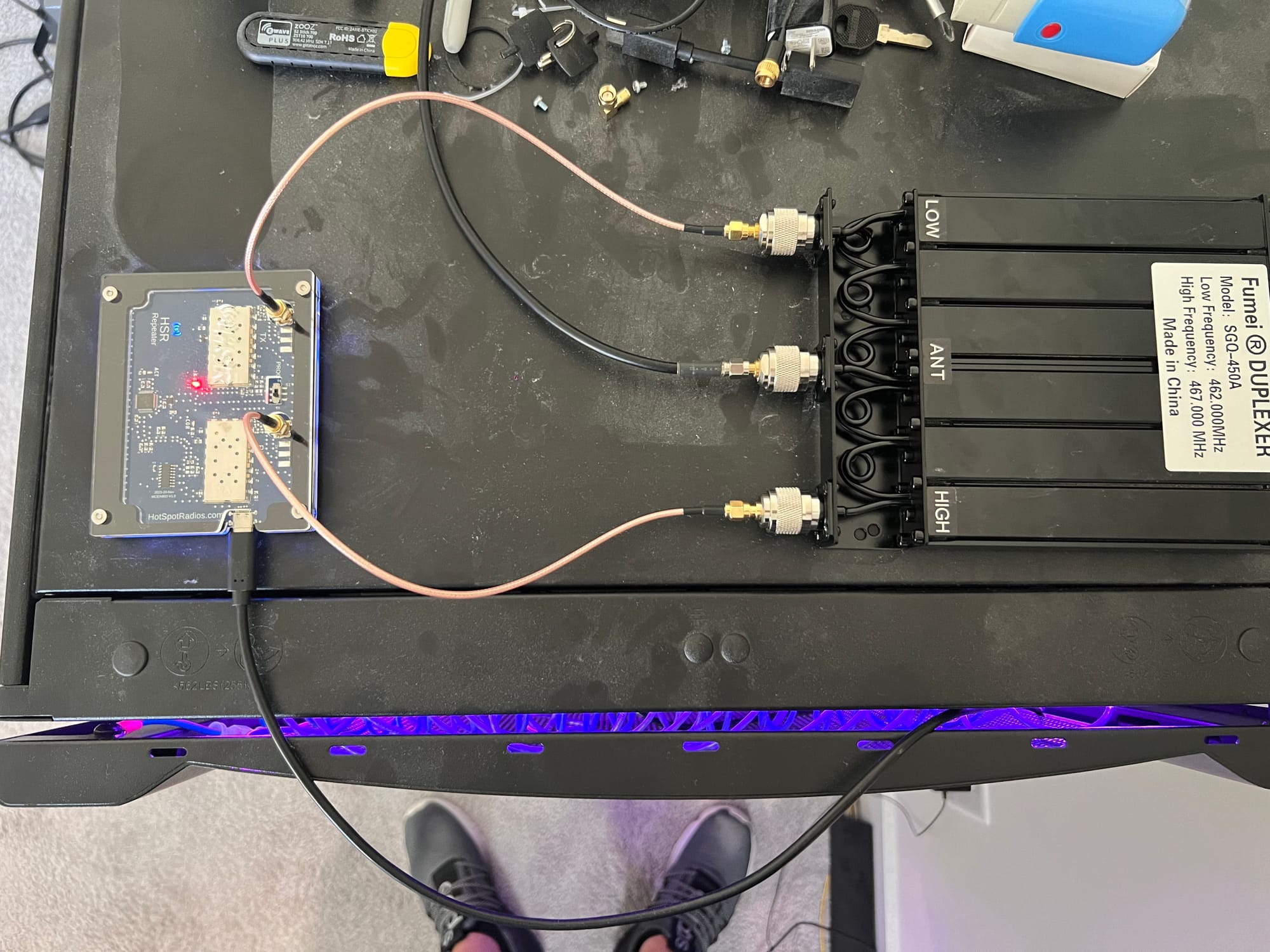
My setup is built around an HSR full-duplex hotspot from Hotspot Radios. Rather than having the AllStar computer built into the hotspot itself, mine is connected to a virtual machine running ASL3 in my home lab.
The RF side operates very much like a miniature UHF repeater:
Output: 439.000 MHz Input: 449.000 MHzSplit: 10 MHz
The transmit and receive antenna ports from the HSR are connected to an inexpensive mobile duplexer, and from there to a mag-mount antenna sitting on top of my server cabinet. The 10 MHz separation makes achieving adequate isolation relatively easy with this type of duplexer while minimizing the possibility of the transmitter interfering with the receiver.
Despite being a small indoor node, it works remarkably well. I can typically access it with a handheld radio from up to about a mile away from home. That gives me excellent coverage throughout my neighborhood, which was exactly what I wanted. Instead of struggling to reach a more distant repeater from inside the neighborhood, I simply talk to my own little repeater.
Why I Chose Full Duplex
A full-duplex hotspot costs more than a basic simplex AllStar node, but for me there is one feature that makes the additional expense worthwhile.
With a simplex node, while the node is transmitting, its receiver generally isn’t available for you to take control of it. If you’re connected to a busy system, that can leave you waiting for an opening before you can issue commands.
A properly configured full-duplex node doesn’t have that limitation. I can transmit into the node while it is transmitting back to me. If a network gets extremely busy and I want to disconnect, I can key my handheld, enter the appropriate DTMF disconnect command, and move somewhere else.
That capability alone is why I would choose full duplex again.
Any AllStar Node, Right From a Handheld
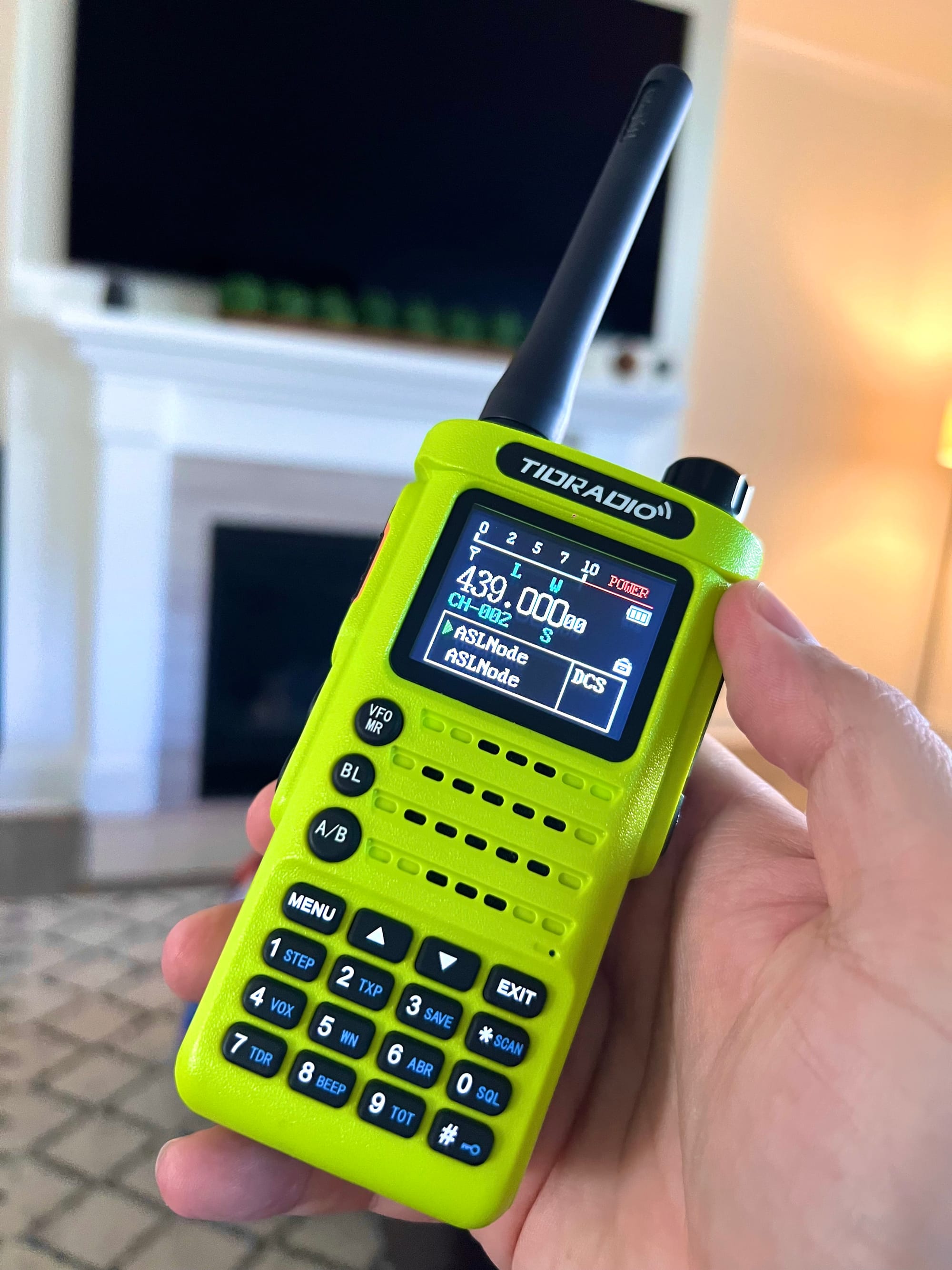
That’s where this little box really becomes interesting.
I’m not limited to Carolina 440 or New England. I can dial another AllStar node and connect my little neighborhood RF system to compatible repeaters, hubs, and nodes elsewhere. Carolina 440 itself uses AllStar to extend its network beyond normal RF range.
So from an ordinary UHF handheld in my backyard, I can potentially be talking through a radio system hundreds or thousands of miles away.
The Best of Analog and Digital Linking
For me, AllStarLink offers the best of both worlds.
You get much of the flexibility and worldwide linkability associated with today’s digital radio networks, while retaining the familiar sound and simplicity of conventional analog FM. There’s no requirement for an expensive DMR, D-STAR, or System Fusion handheld on the RF side.
An inexpensive analog FM handheld can be all you need.
That also makes AllStar an excellent introduction to linked amateur radio for someone new to the hobby. The barrier to entry can be remarkably low: program a conventional FM radio for the appropriate frequency and tone, and the Internet infrastructure behind the repeater or node handles the long-distance linking.
My little full-duplex node sitting on top of the server rack may only cover my neighborhood directly, but what it’s connected to can cover the world.
And that’s what makes it such a cool part of my ham shack.
For more information, visit AllStarLink or the Carolina 440 UHF Link System.
Hope to hear you on AllStar sometime!