The HOA-Proof 40-Meter Antenna: Working the East Coast With 100 Watts and a Wire

Living in an HOA can make amateur radio—especially HF—interesting. Towers, beams, and even obvious wire antennas may not be practical. So instead of trying to fight the limitations of my property, I decided to use one of them to my advantage.
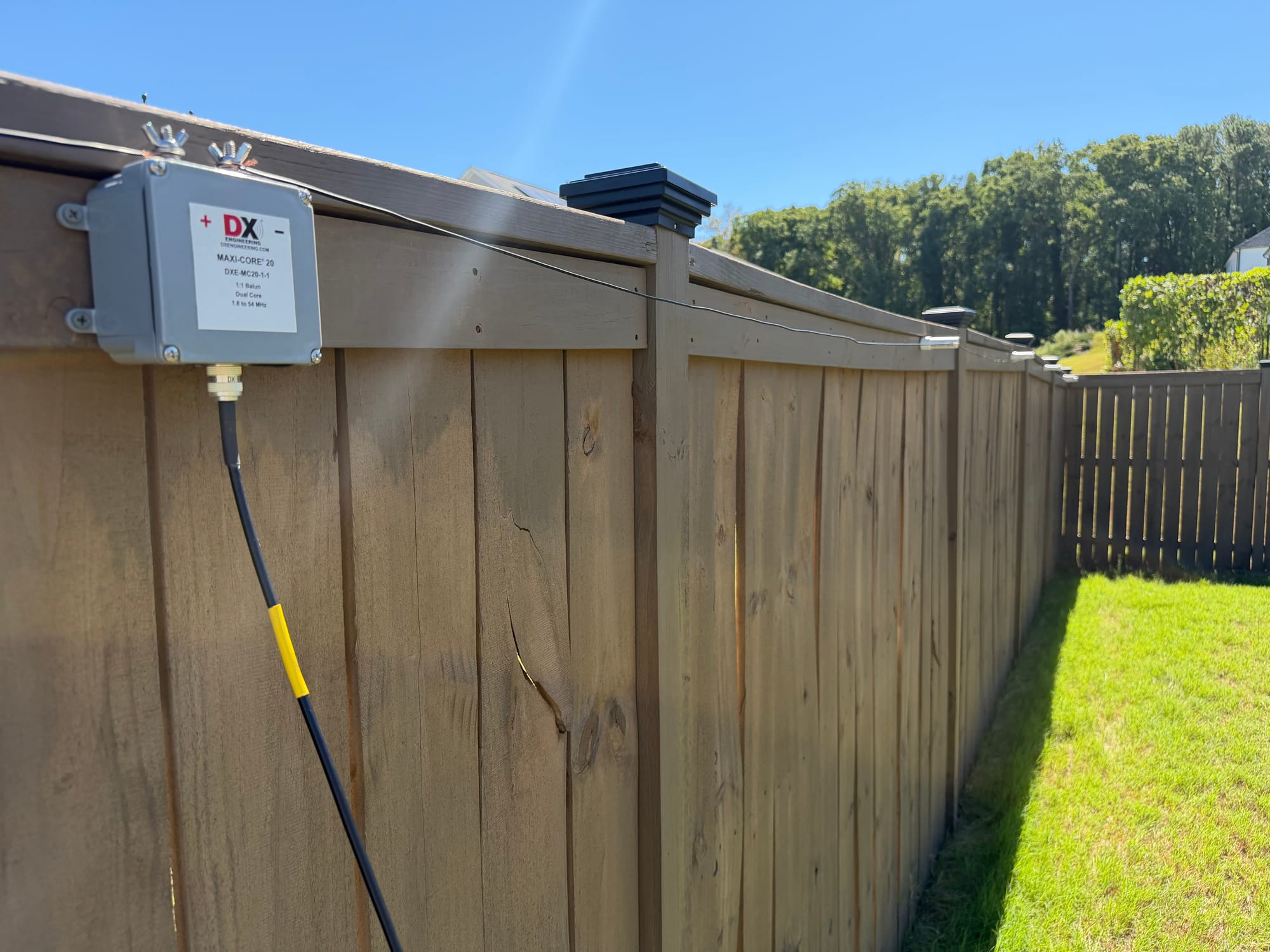
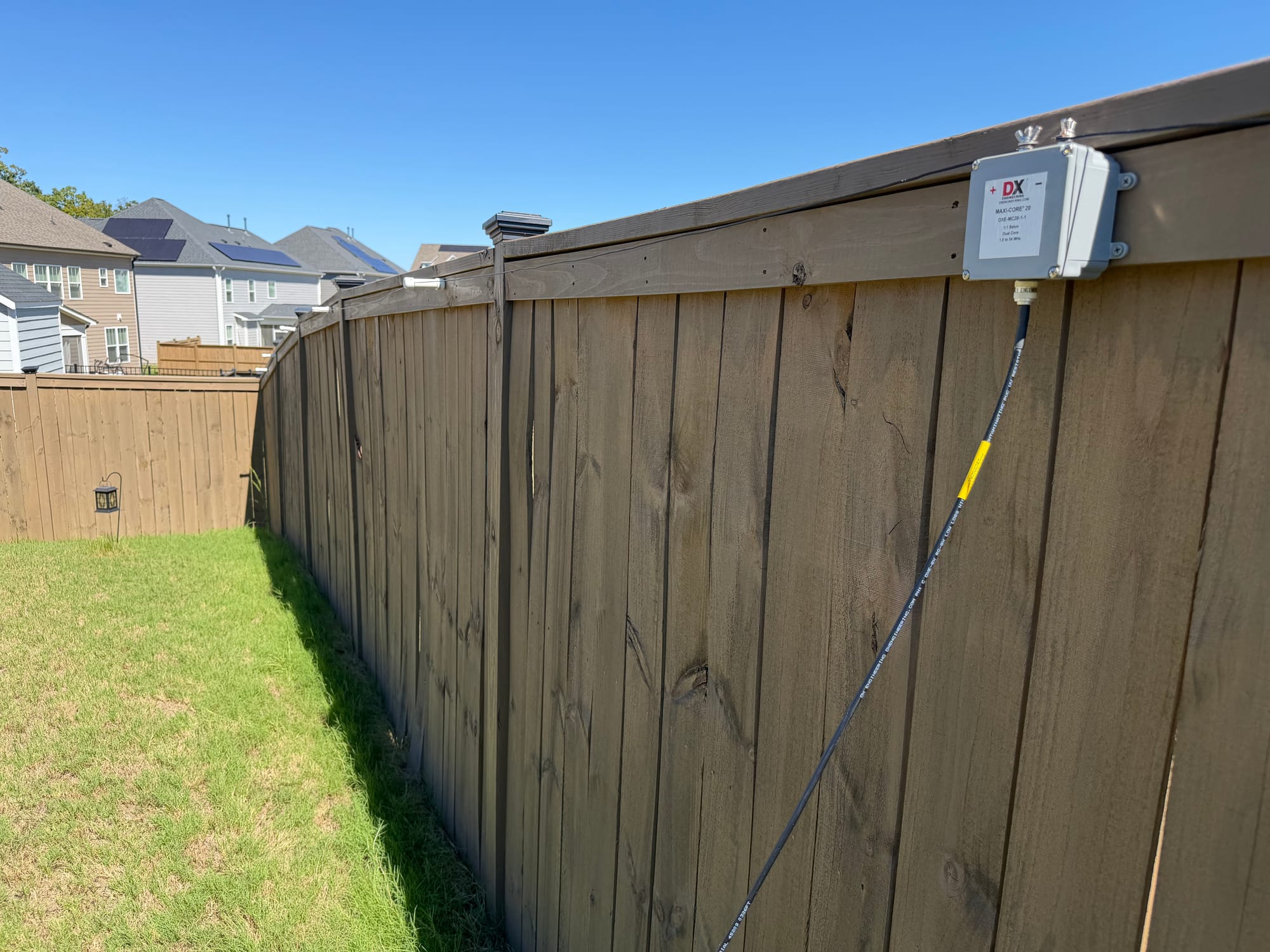
The result is my stealth 40-meter NVIS dipole: a simple antenna made from #18 black wire, mounted along the top of my wooden privacy fence about seven feet above the ground.
It isn’t high. It isn’t elaborate. From more than a few feet away, you can barely tell it’s there.
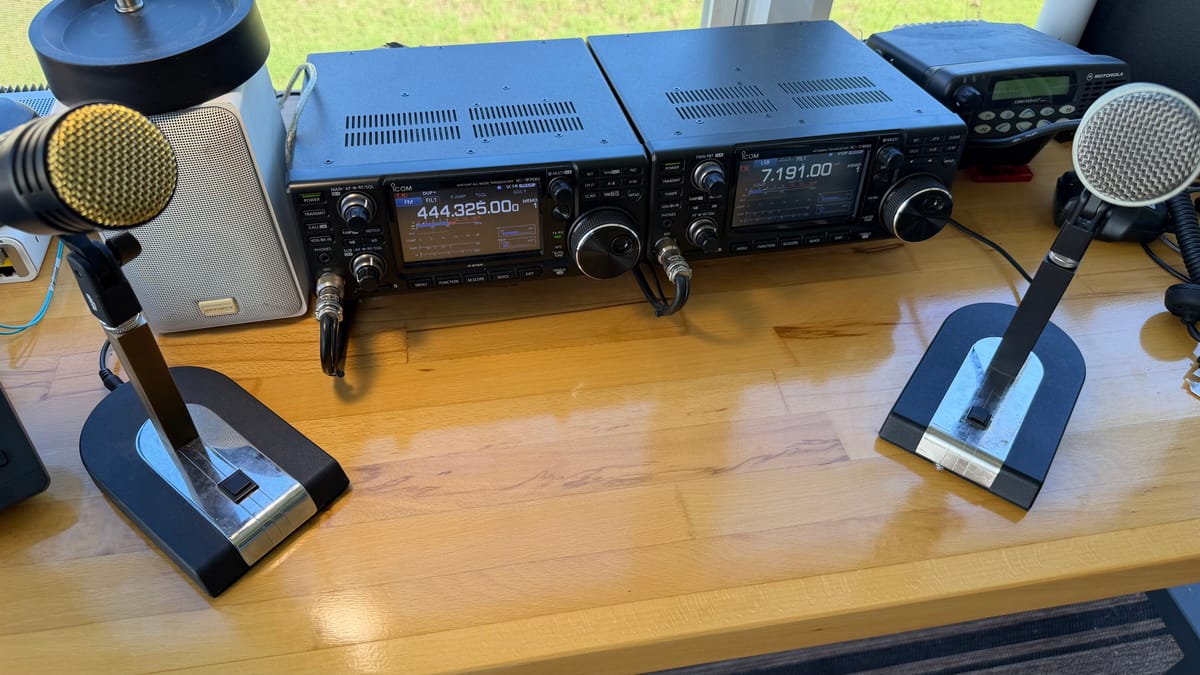
And with 100 watts from my Icom IC-7300, it regularly gets me around much of the East Coast during the daytime.
Hiding an HF Antenna in Plain Sight
The antenna is essentially a 40-meter center-fed dipole that follows the perimeter of my backyard fence.
At the feed point I’m using a DX Engineering MAXI-CORE 20 1:1 current balun. Coax from the IC-7300 feeds the balun, and the two #18 black wire elements leave the balun in opposite directions along the fence.
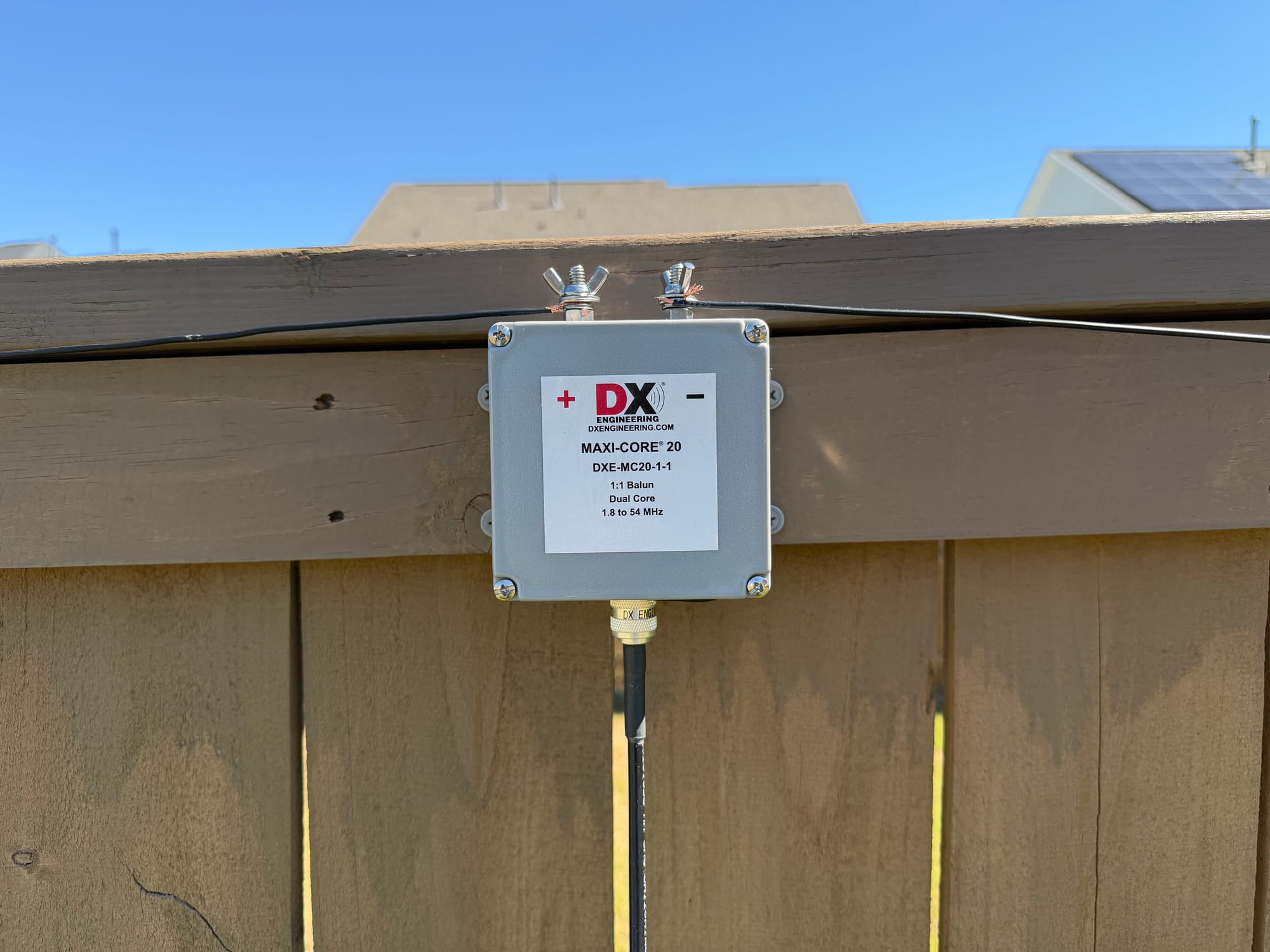
The black wire was intentional. Against the dark-stained wood, it almost disappears.
I made simple four-inch PVC standoffs to keep the wire separated from the fence. They’re nothing fancy—just inexpensive PVC pieces mounted to the fence with the antenna wire passing through them. They provide some spacing between the radiator and the wood while keeping everything neat and unobtrusive.
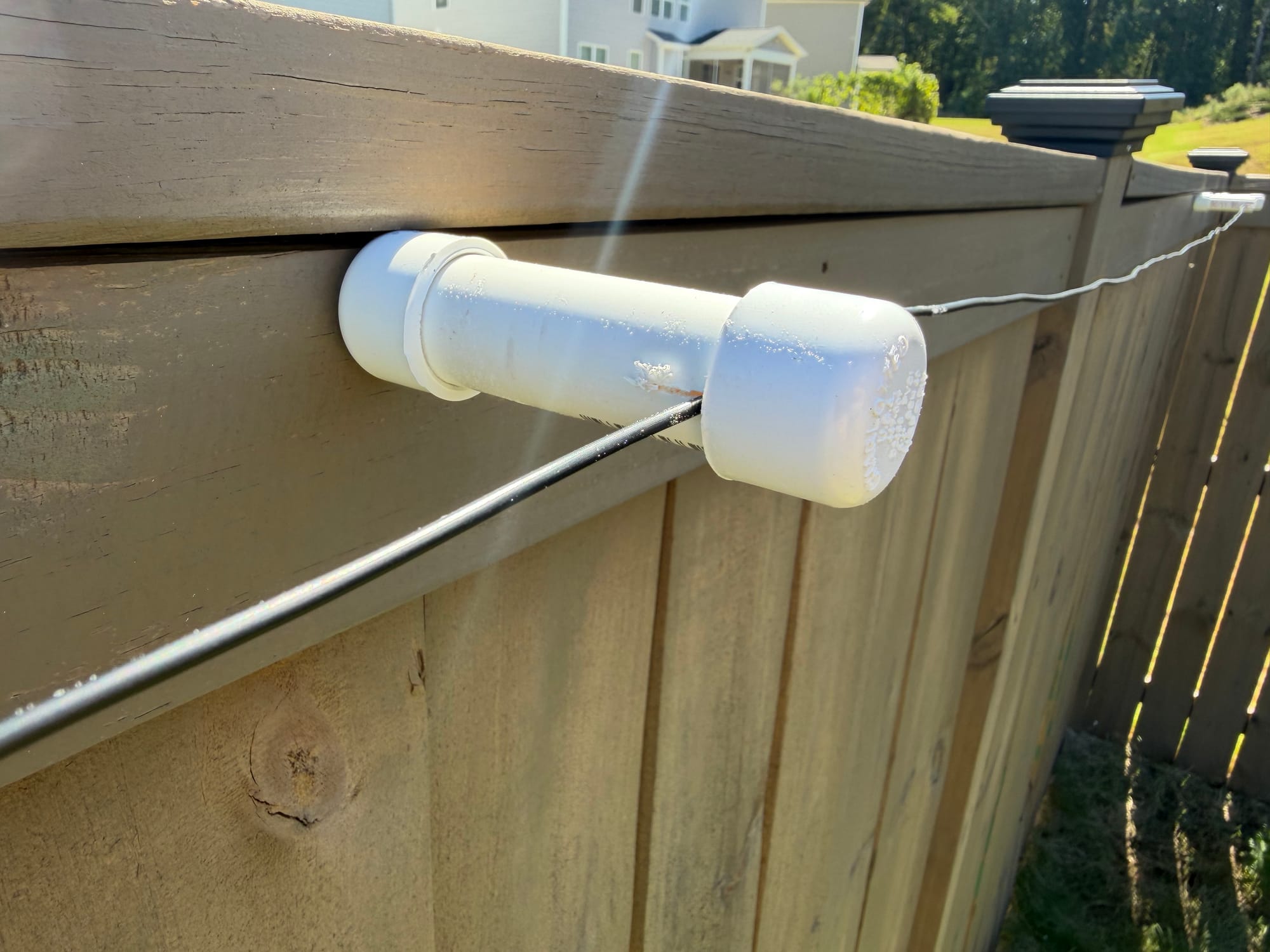
That’s particularly important because the entire point of this installation is stealth.
Unless you know what you’re looking for, you could stand in my backyard and probably never realize there’s a 40-meter antenna running around the fence.
Seven Feet High—and That’s Actually the Point
Normally, putting a 40-meter dipole only seven feet above the ground would sound like a serious compromise.
For conventional DX work, it is.
A half wavelength on 40 meters is roughly 66 feet, so an antenna only seven feet high is a tiny fraction of a wavelength above ground. The ground dramatically changes the antenna’s radiation pattern.
Instead of concentrating much of its energy toward the horizon, a low horizontal dipole develops a very strong high-angle radiation pattern.
For DX, that’s generally undesirable.
For NVIS—Near Vertical Incidence Skywave—it is exactly what we want.
Think of it as pointing the antenna upward rather than outward.
How NVIS Works
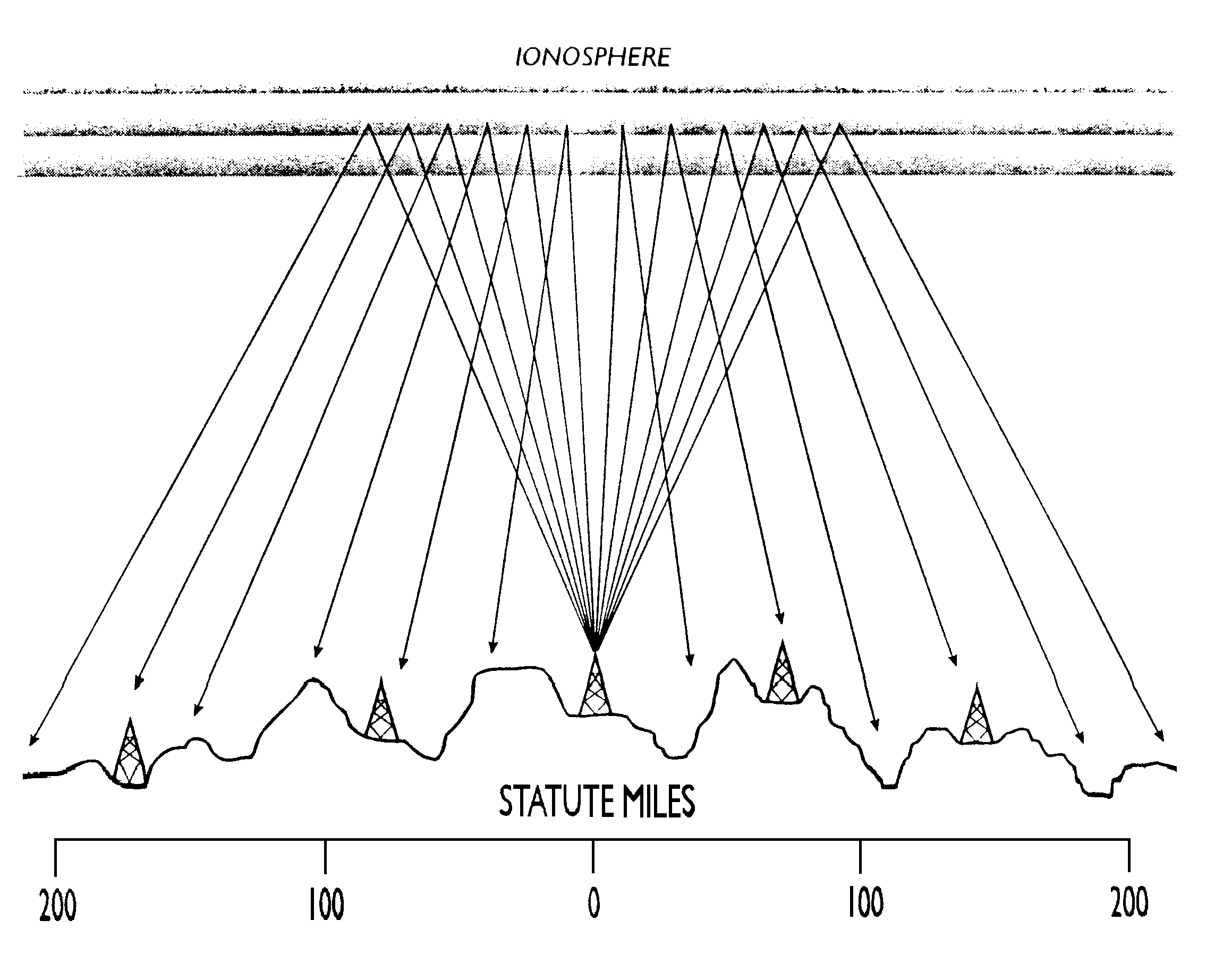
With NVIS, the antenna launches a large portion of its RF energy toward the ionosphere at very high angles—often nearly straight overhead.
When conditions support 40-meter NVIS propagation, that energy is refracted by the ionosphere and returned to Earth relatively close to the transmitting station.
Instead of creating the familiar HF “skip zone,” where nearby stations can’t hear one another but stations thousands of miles away can, NVIS can fill in that gap.
That makes it useful for communications ranging from relatively local distances out to several hundred miles, sometimes farther depending on propagation.
From North Carolina, I’ve been able to use this little fence antenna to work stations across a substantial portion of the East Coast during favorable daytime conditions.
There’s something particularly satisfying about talking to someone hundreds of miles away and then looking outside at what made the contact possible:
a nearly invisible piece of #18 wire attached to a fence.
Why 40 Meters Works Better During the Day
There’s an important qualification when talking about NVIS: the ionosphere isn’t literally a mirror, and its usable frequencies change throughout the day.
Solar radiation ionizes the upper atmosphere during daylight. That generally raises the maximum usable frequency for high-angle paths, making 40 meters (7 MHz) much more likely to support NVIS propagation during the day.
After sunset, ionization decreases. The maximum usable frequency for a near-vertical path can fall below 7 MHz, and when that happens, my 40-meter signal simply isn’t refracted back toward the ground the way it was during the daytime.
The antenna is still radiating.
The problem is that much of that energy is going upward at an angle the nighttime ionosphere may no longer support at 7 MHz.
That explains why this antenna can be surprisingly effective during the day and considerably less impressive for nearby and regional contacts at night.
The Next Step: Adding 80 Meters
There’s an obvious solution.
Add an 80-meter element.
My eventual plan is to turn the installation into something resembling a stealth 40/80-meter fan dipole, with both sets of elements connected to the same feed point.
That would give me a very useful combination:
- 40 meters during the daytime, when the ionosphere can support high-angle propagation around 7 MHz.
- 80 meters after dark, when the lower frequency is much more likely to remain below the nighttime NVIS maximum usable frequency.
The 80-meter element will present another challenge because a half-wave 80-meter dipole requires roughly twice as much wire as the 40-meter version. Fortunately, with a fence surrounding the backyard, there’s room to experiment with bending and routing the elements while preserving the stealth installation.
It won’t look like a textbook dipole.
But neither does the current antenna—and that’s part of the fun.
A Compromise That Actually Works
Would this antenna outperform a 40-meter dipole suspended 40 or 50 feet in the air?
Of course not.
Would I rather have a 60-foot tower and a collection of full-size antennas?
Absolutely.
But antenna design isn’t always about constructing the theoretically perfect antenna. Sometimes it’s about building the best antenna you can actually put on the air.
In my situation, that means working within an HOA, keeping the installation visually unobtrusive, and making productive use of the geometry available to me.
A seven-foot-high dipole sounds terrible if your objective is low-angle DX.
But change the objective to regional NVIS communication and suddenly that same “problem” becomes part of the antenna design.
That’s one of my favorite things about amateur radio: experimentation often matters more than perfection.
My station is putting about 100 watts from an Icom IC-7300 into a 1:1 current balun and a length of #18 wire hidden along a wooden fence.
No tower. No beam. No giant structure advertising the presence of an amateur-radio station to the neighborhood.
Just RF, some wire, a little PVC, and the ionosphere.
And during the day, that’s enough to put me on the air across a good portion of the East Coast.
Not bad for 100 watts and a wire.